Heavy Rainbows
Twisted Pig
During our weekly visit to the supermarket we've become familiar with choosing prepackaged cuts of meat displayed neatly inside polystyrene trays wrapped in clingfilm. We're encouraged to choose pieces of gammon, ham, bacon and pork. However let's take a reality check - These tasty commodities are in fact the flesh of dead animals, young pigs to be precise.
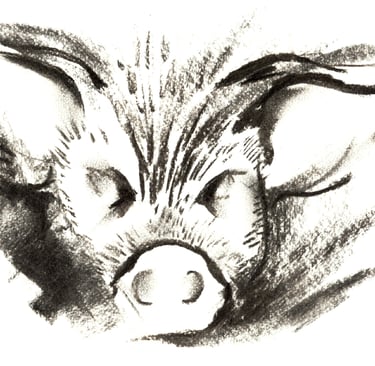
I'm personally not against eating dead animals, my concern is with how they're treated prior to being murdered and processed into our food chain. Pigs are intelligent, sensitive creatures that enjoy playing and general interaction with humans. Yet mother pigs are systematically caged whilst their young babies are dragged away screaming, and few pigs live beyond their second birthday, often never seeing natural grass or breathing fresh air prior to being slaughtered (see image: Twisted Pig).
I urge DEFRA, the UK government, and all associated farmers to award pigs the mandatory right to live the full term of their natural lives with access to a natural outdoor environment, and when appropriate, playful integration with people at visiting farms, that's recently been proven to help people with mental health issues.
After the pig has died naturally, after a long content and natural life then, and only then, can humans devour their flesh, which would serve as a tribute to the pig's life rather than consuming its carcass as a mere commodity.

Heavy Rainbows Blog
A Relationship with Art
Creating art is usually regarded as a 'way of life' rather than an occupation by the artist, and is often referred to as a 'love affair'. In my case I learned to draw before I could read or write, and so from an early age it became my primary form of communication, developing over a period of years into a close relationship that I now regard as a close trustworthy friend.
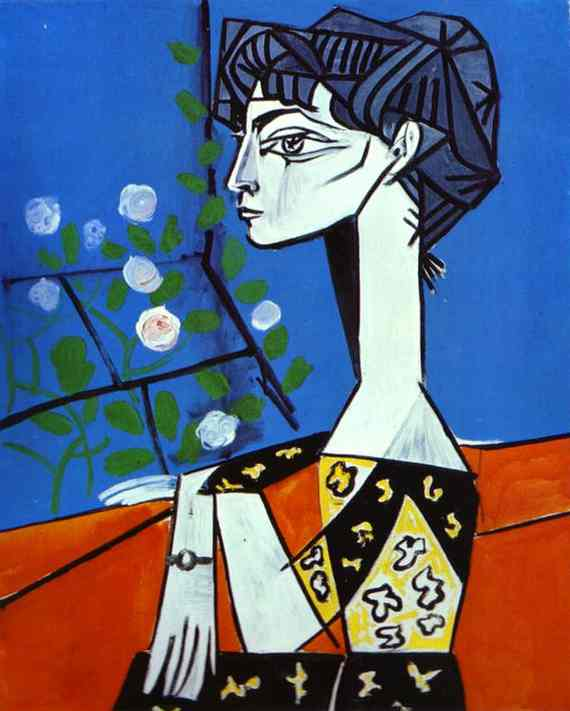
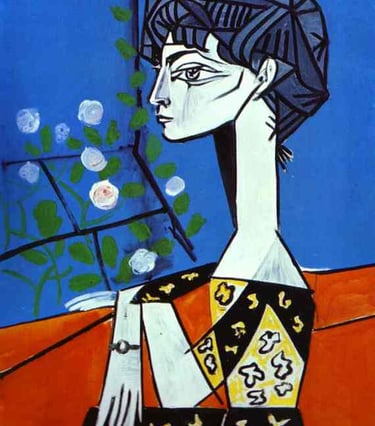
If an artist is having a love affair with being creative, it therefore follows they are in love with their own imagination. This is potentially problematic, particularly as the artists 'real' partner could be justified in perceiving they're in a three-way relationship. Many artists reconcile such a dilemma by including their partner into their artwork, Picasso is famous for doing this (Jacqueline With Flowers 1954), though several of his partners disclosed feelings of coming second to his love of, and devotion to, art.
Anxiety's Role in Feuling Creativity
I am generally more creative during periods of anxiety. When something is bothering me I respond by creating drawings that often develop into paintings or some other kind of artefact. During more comfortable times, on reflection, I tend to be less creative as I'm too busy relaxing and soaking up such precious moments.
Prior to creating a piece of artwork my initial ideas develop from random events, personal experiences or perhaps a photograph. They're then transformed into sketches, often accompanied with notes. Picasso once said: "At the beginning of each picture there is someone who works with me, toward the end I have the impression of having worked without a collaborator". Personally, creative inspiration only occurs when I'm immersed in the process of painting, sometimes involving an overflow of powerful feelings that fuse with any previous conscious planning.
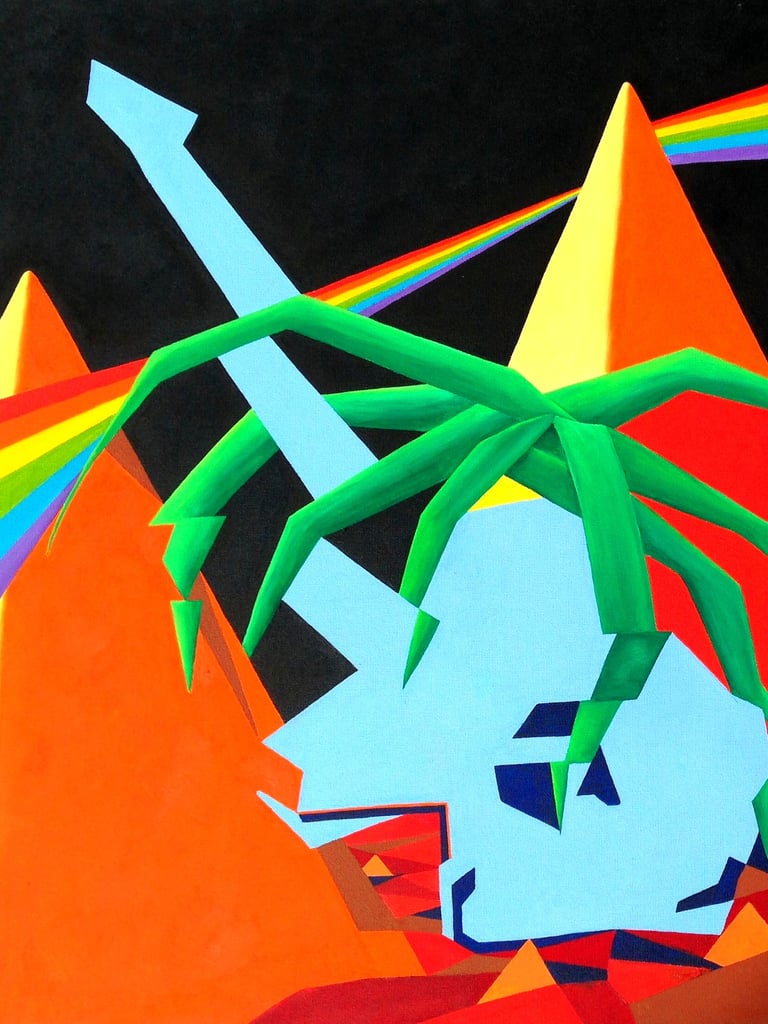
My painting 'The Heavy Sound of Light' (60 x 50 cm) is a kind of self portrait, composed in a cubist style, consisting of personal influences represented by inanimate objects involving culture and inclusion, music and the environment, and a living plant that, apart from possessing aesthetic beauty, plays a fundamental role in the sustainability of life such as cleansing the air of carbon emissions and other greenhouse gasses. The awe-inspiring spectrum of colour is created through a prism of light that shines brighter than ever from a lighless sky. The fractured nature of the composition is perhaps symbolic of today's climate.
Automatism and Dreams
Some artists receive creative inspiration from dreams. For example Paul McCartney's lyrics for his song 'Let It Be' were written almost entirely during a dream that involved a meeting with his deceased mother. On another occasion he woke up with the tune for 'Yesterday' ringing in his ears.
The majority of artists experience a degree of automatism which is utilised in conjunction with rational consciousness to create a satisfactory end result. Some artists have experimented with full automatism, including Surrealists, in a bid to liberate the mind from preconceived societal limitations. However I believe such a process leads to pure abstraction which, ultimately, has little or even nothing to say.
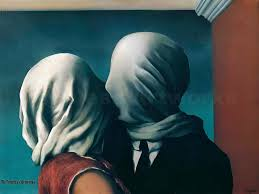
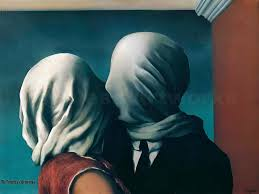
Surrealists were disillusioned with contemporary leaders who'd sent millions of soldiers to their death in an avoidable world war. Surrealist Max Ernst was interested in detaching the conscious mind from the creative process. The objective was to transform the author of the work into a mere spectator free from all moral and social responsibility. Other Surrealists such as Rene Magritte were inspired by the power of dreams and their freedom from conscious constraints, see image: The Lovers (1928).